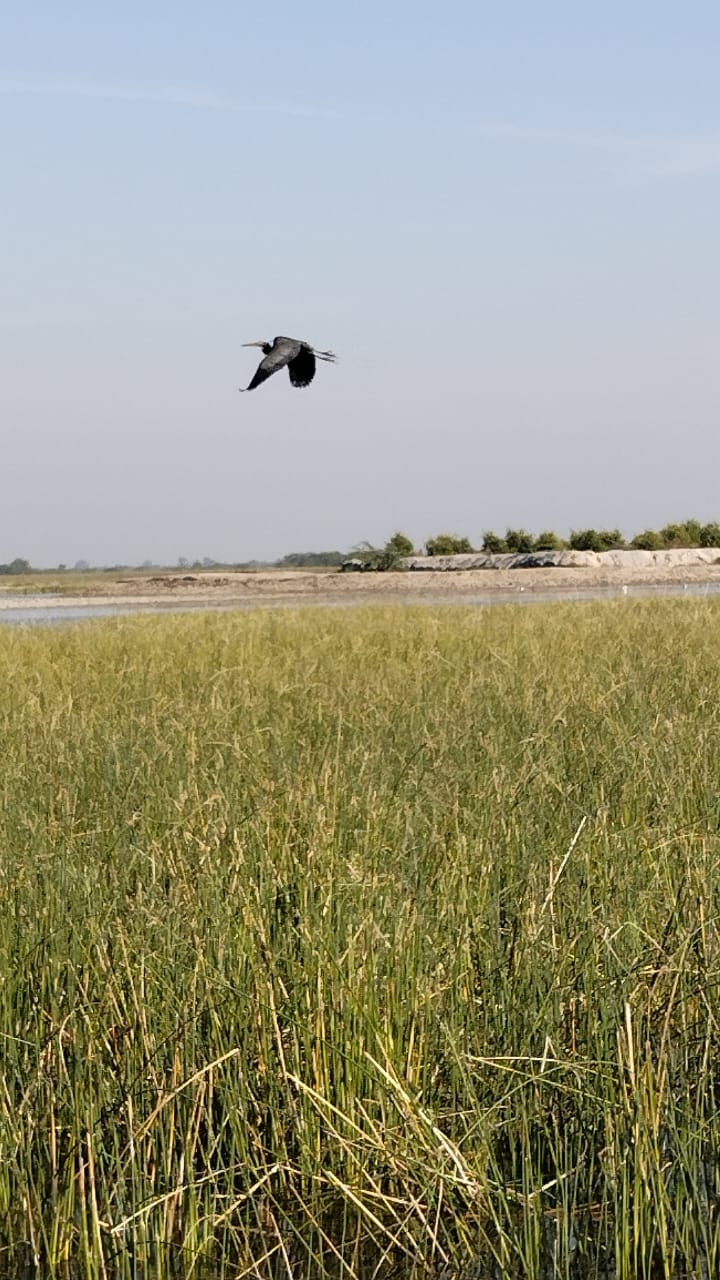
An exciting trip to this Indian bird sanctuary, Nalsarovar, will guarantee a life-long memory of watching the birds.
Nalsarovar is bird heaven in the waters of a 120 sq km area. Flocks of migrating birds reach out here in the winter. Otherwise in isolation, this place ironically warms up in the cold season on their arrival. And they stay here for a little more than a quarter of the year.
Viramgam is the nearest railway station which is 40 km from Nalsarovar. The distance between Ahmedabadbad airport and Nalsarovar is 73 km. After gauging 66 km of the roadway from the Ahmedabad railway station, in Gujarat state of India, one has to pay the entry fee here. Let’s not regret paying INR 500 including car parking for three people once you’re already there.
Henceforth one needs to be careful while negotiating with boating agencies. The gambits practised by the boatmen are intended to tempt visitors with different packages. INR 300 per person is the official rate for boating. That incorporates bird-watching sites and a visit to an island for a Gujarati meal. The menu is fixed with millet chapati and vegetable dishes charged at INR 200.

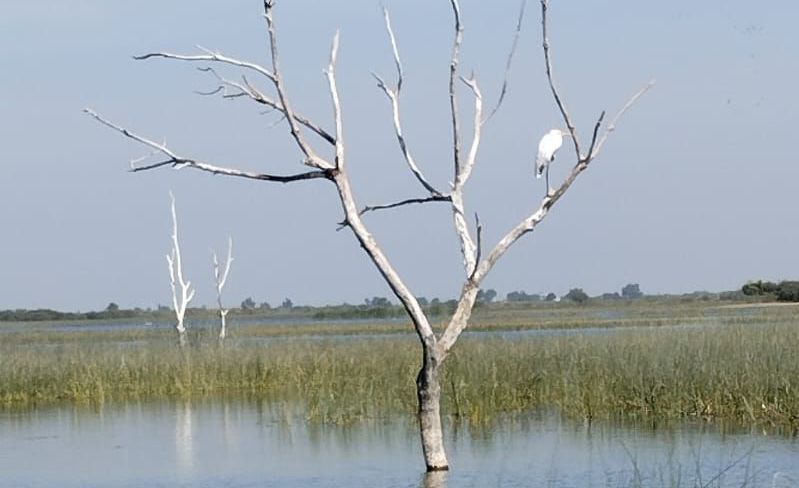
All advisories of the forest department must be followed to be safe and reasonable. A beautifully sprawled campus is all to delight the mood of the visitors in the pleasant climate. Bird watching in Nalsarovar is accompanied by boating in shallow waters. Astoundingly, the birds in the daytime fly in or over lake waters and take shelter on the trees on nearby grounds at night.
Feeding any type of grubs to birds is prohibited in the entire wetland area. However, visitors can’t abstain from offering well-known Ganthiya and biscuits to befriend the birds. Such mischief of the men brings the birds closer for some thrilled photo clicks.
The historical chronology of Nalsarovar has royal consequences.
Ahmed Shah1 built Ahmedabad city in 1411 AD. During his Gujarat Sultanate, a barrier across the Sabarmati River was built for water storage.
Mughal emperor Jehangir in his reign frequently visited this region for hunting during the 16th century.
The same wetland is now known as Nalsarovar. The average depth of this lake is four feet which harbours a variety of plants and fish as well including some mammals.
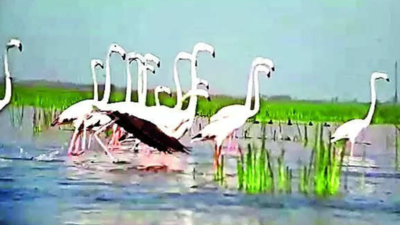
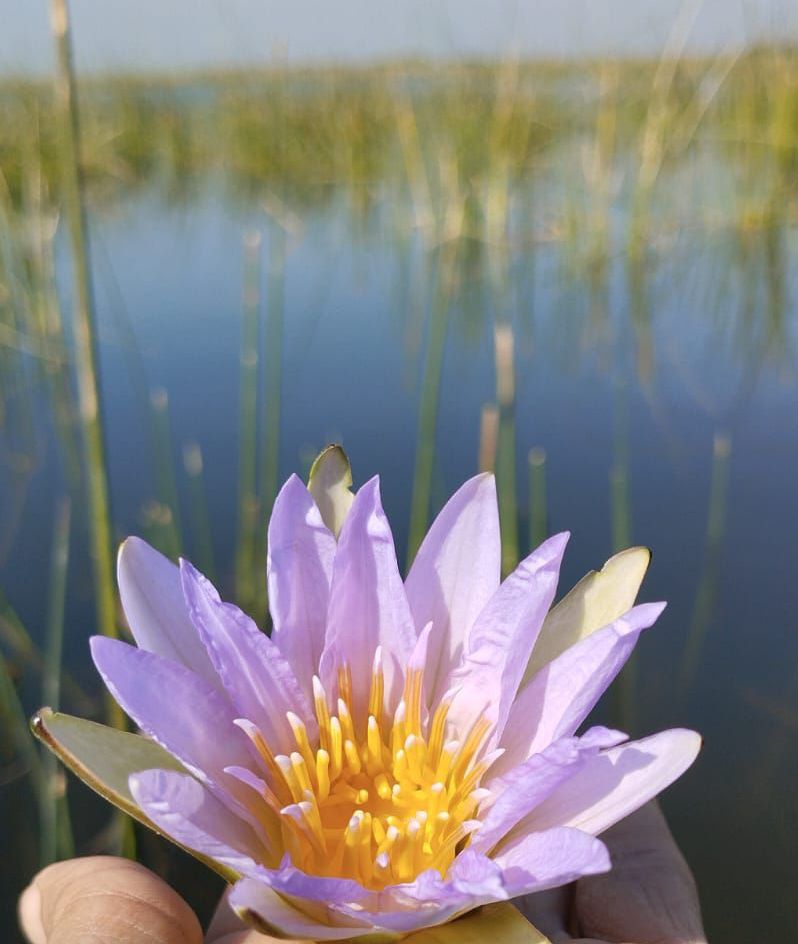
Water Lilley is seen almost everywhere in the lake which serves as food for some birds. This shallow wetland colonizes more than sixty-odd species of aquatic vegetation. Although Wild ass and Blackbuck are there, the main mammal attractions for the visitors are Rosy pelicans and flamingoes. White storks, Brahminy ducks, Herons and the list goes on till the birds’ tally reaches a bit above 225 species. About 1.75 lacs to 2.00 lacs bird population is recorded inhibiting Nalsarovar.
One has to be keen-eyed while watching birds in the open sanctuary. Focussing and fixing eyes while the bird is in sight may retain the enthusiasm of the bird lover. Any undeserved movement or sound might dash the cunning singer out of the frame. Birds have identifiable habits like walking, running, jumping and flying. They exhibit lucrative flying and gliding patterns in the air that readily chill viewers.
Migration of the birds from Siberia, Russia, Europe and other parts of the world starts in November and lasts till February. This is the best time to knock on the doors of this Ramsar Project site.
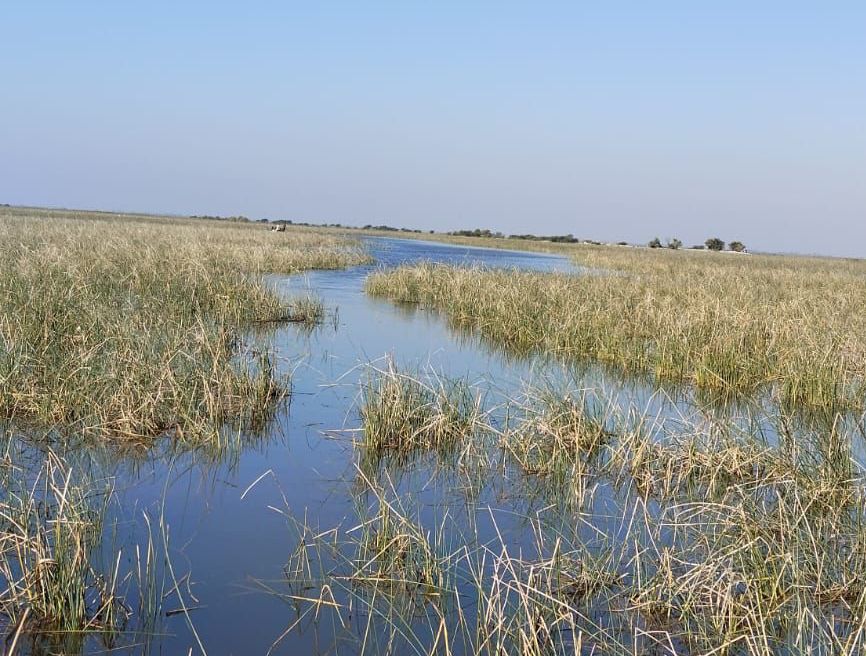
Lovebirds migrating from Mansarovar lay eggs in water grass. This grass is known as ‘Gondaro’ in the local language. The baby bird takes birth in about two and a half months. The parents feed them affectionately and train them in Nalsarovar. The babies learn to fly and swim across the pleasant environment of the Nalsarovar Bird Sanctuary. Thanks to the greatness of nature, on the return journey to Mansarovar, the kids confidently swim in the air with their parents.

According to Moiyuddin, a boat operator, 400 boats are sailing on the waters of the lake. Life jackets are also not essential as the shallow wetland is free from the danger of capsizing. The villagers inhabiting nearby get employment in the bird-watching season. The rest of the year they do farming and cattle keeping. The lake water is extensively used for irrigation and domestic purposes. Life in the Nalsarovar region is far from the modern lifestyle. This is visible from the fact that only men go out for life earnings and women do the house chores.
The sanctuary didn’t become a bird sanctuary until 1969.
The year 2012 again added to it as the Ramsar Wetland Project and the lake acquired international importance.
Worth noting that Ramsar is an Iranian city where the Ramsar Treaty took place in 1971. This convention is signed for the environmental protection and development of wetlands across the globe.
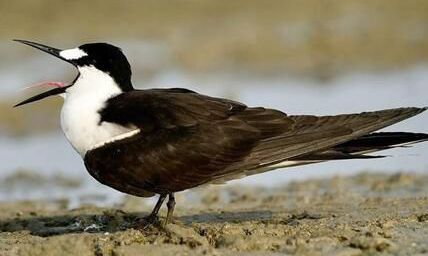
Nalsarovar Bird Sanctuary is administered and maintained by the forest department. The facilities provided are mediocre. A dormitory can be availed for a group of people for an overnight stay. Tents too are available for individual families with attached toilets. But in general, birders would spend four to five hours in the wetland area before returning home. From sunrise to sunset would suffice for an exciting experience for the birding. Hence, most visitors do not wish to stay. Ornithologists or other researchers may stay longer and find ample varieties to dig deep into the subject.
 Shasak
Leave a comment